If you are wondering how early to arrive at Heathrow, the answer depends on your destination, airline, and travel time. As the UK’s busiest airport, Heathrow Airport handles millions of passengers every year, so planning your arrival time is essential.
Whether you are flying domestically within the UK, heading to Europe, or taking a long-haul trip, knowing exactly how early to arrive at Heathrow for international flight departures can help you avoid stress, long queues, and missed flights.
This guide explains recommended arrival times, peak travel considerations, terminal differences, and expert tips to move through Heathrow smoothly.
How Early to Arrive at Heathrow for Domestic Flights?
If you are flying within the UK, knowing how early to arrive at Heathrow for a domestic departure can help you avoid unnecessary waiting while still giving yourself enough time to clear security comfortably.
For most UK domestic departures from Heathrow Airport, airlines generally recommend:
- 90 minutes before departure if you’re travelling with hand luggage only
- 2 hours before departure if you’re checking baggage
This standard Heathrow domestic flight arrival time allows enough time for check-in (if required), bag drop, and security screening.
Domestic flights typically move through security faster than international routes because there are no outbound passport control checks. However, security queues can still build up during busy periods.
When Should You Arrive Earlier?
If you are wondering how long before a UK flight should I arrive at Heathrow during peak hours, consider adding extra buffer time. Early morning departures between 5:30am and 8:30am are among the busiest times at the airport, particularly on weekdays when business travellers are flying.
During these windows, Heathrow security wait times domestic can increase significantly. School holidays, bank holidays, and Friday afternoons can also lead to longer queues.
Safe Recommendation
To reduce stress and avoid rushing:
- Aim for 2 hours before departure as a safe baseline
- Add an extra 20–30 minutes during peak travel times
While domestic flights require less processing than international journeys, Heathrow remains one of Europe’s busiest airports and allowing a little extra time can make your departure much smoother.
How Early to Arrive at Heathrow for International Flight?
If you’re specifically searching for how early to arrive at Heathrow for international flight, timing becomes even more important. International departures from Heathrow Airport typically require more processing than domestic routes, so arriving with enough buffer time is essential.
Here are the general guidelines:
Short-Haul International (Europe)
For flights to European destinations, airlines usually recommend arriving:
- 2 hours before departure
This timeframe generally covers check-in, baggage drop, and security screening. However, during peak travel periods, your Heathrow international departure time may require a slightly earlier arrival to avoid long queues.
Long-Haul International (USA, Asia, Middle East)
For long-haul routes, the standard recommendation is:
- 3 hours before departure
If you are asking, how early should I get to Heathrow for long haul flight departures, three hours is considered the safest minimum. In some cases, frequent flyers even arrive slightly earlier during busy seasons.
Long-haul flights often involve:
- Additional document checks
- Visa verification
- Larger passenger volumes
- Busier security lanes
- Stricter boarding cut-off times
Airlines typically enforce earlier Heathrow check-in time for international flights, particularly for intercontinental services. Boarding gates may also close 20 minutes or more before departure.
Passport & Security Considerations
While the UK does not operate full exit passport control in the same way as some countries, you may still encounter document verification at check-in or the gate. Depending on your destination, Heathrow passport control outbound procedures may include visa and travel authorisation checks.
For peace of mind, arriving 3 hours early is the most reliable rule for international departures from Heathrow. This allows for unexpected delays, seasonal congestion, or additional airline processing ensuring a smoother and less stressful start to your journey.
Heathrow Terminal Differences
Understanding your departure terminal is important when deciding how early to arrive at Heathrow. As one of the world’s busiest international hubs, Heathrow Airport operates across four active passenger terminals, and congestion levels can vary depending on the time of day and airline schedules.
Here’s a breakdown of the terminals:
- Terminal 2 – Primarily used by Star Alliance airlines and several European carriers.
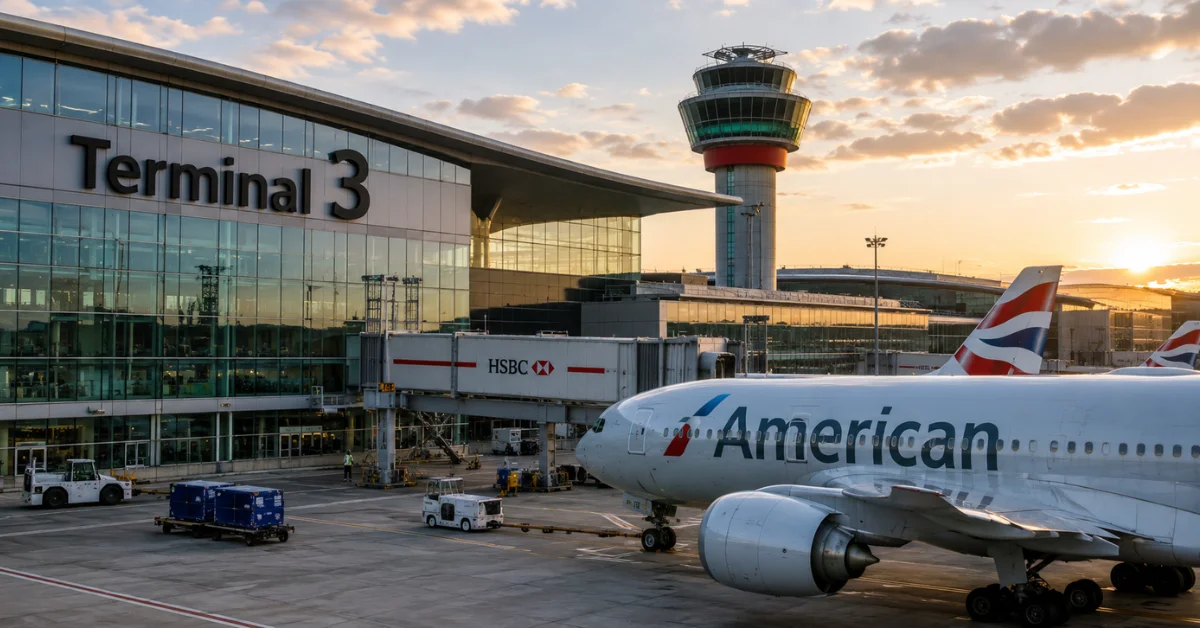
- Terminal 3 – A mix of long-haul and international airlines, including major transatlantic routes.
- Terminal 4 – Home to select international airlines operating long-haul and Middle Eastern routes.
- Terminal 5 – Mainly dedicated to British Airways, along with a small number of partner airlines.
Which Heathrow Terminal Should I Arrive Early For?
If you are wondering which Heathrow terminal should I arrive early for, Terminal 5 often experiences the heaviest peak congestion, especially during weekday mornings and late afternoons when business travel is at its highest.
Terminal 3 can also become busy due to the volume of long-haul departures, particularly to the United States.
Heathrow Terminal 5 Arrival Time Recommendation
For departures from Terminal 5, many travellers choose to arrive slightly earlier than the standard guidance — particularly for international or long-haul flights. Even with efficient security operations, passenger volumes can create longer queues at check-in and bag drop.
Best Time to Arrive at Heathrow Airport
The best time to arrive at Heathrow airport depends on both your terminal and departure window. Early mornings (5am–9am) and late afternoons (4pm–7pm) are typically the busiest across all terminals.
If you’re flying during these periods, consider adding an extra 30–45 minutes to your standard arrival recommendation. Factoring in terminal-specific traffic ensures a smoother experience and reduces the risk of last-minute stress before boarding.
Peak Travel Times at Heathrow
When planning how early to arrive at Heathrow, it’s important to factor in peak congestion periods. As the UK’s busiest airport, Heathrow Airport experiences predictable surges in passenger volume throughout the week and year.
You should arrive earlier than the standard recommendation if travelling during:
- Christmas and summer peak season
- Early mornings (5am–9am)
- Friday afternoons
- School holidays
These are considered typical Heathrow airport busy times, particularly in terminals handling high volumes of long-haul departures.
During these periods, Heathrow security queue times can increase significantly, and check-in desks may experience longer lines. In some cases, congestion can even contribute to minor Heathrow departure delays, especially when passengers arrive late and boarding processes are extended.
If you’re travelling at any of these high-traffic times, adding an extra 30–60 minutes to your arrival plan is a smart precaution.
When You Can Arrive Later?
There are situations where you may not need the full three-hour buffer for international departures. You might be able to reduce your arrival time if:
- You’ve checked in online
- You have airline elite status
- You have fast track security access
- You’re flying business or first class
- You’re travelling with hand luggage only
Premium travellers can also speed up the airport process by booking services such as vip meet and greet heathrow, which provides personalised assistance through check-in and security, significantly reducing wait times.
For the most exclusive and private departure experience, passengers flying long-haul may consider the lhr windsor suite, Heathrow’s private terminal service offering dedicated security, luxury lounges, and chauffeur transfers directly to the aircraft.
These options can dramatically reduce processing time. However, while it may be tempting to cut it close, Heathrow’s size and passenger volume mean unexpected delays can still occur. Even experienced travellers should avoid pushing arrival times too tightly.
Expert Recommendation (Safe Rule)
If you are unsure how early to arrive at Heathrow, follow this simple rule:
- Domestic flights: Arrive 2 hours early
- International flights: Arrive 3 hours early
This buffer covers potential security delays, baggage drop queues, terminal congestion, and unexpected disruptions. While you may occasionally get through faster, building in extra time ensures a smoother, lower-stress start to your journey.
FAQs
Two hours is usually enough for short-haul European flights. However, for long-haul international routes, it is safer to arrive at least three hours before departure to allow time for check-in, security, and document checks.
Yes, you can arrive four hours early at Heathrow Airport, but most airlines will not open bag drop counters more than three hours before departure, so you may need to wait before checking your luggage.
Security can take as little as 10–20 minutes during quiet periods, but during peak travel times it may take 45–60 minutes or longer, depending on the terminal and passenger volume.
Dogs are allowed at Heathrow arrivals if they are registered assistance dogs or pets arriving on a flight that meet UK import regulations. Pet dogs cannot enter the terminal unless they are travelling or officially recognised as assistance animals.
Conclusion
Knowing how early to arrive at Heathrow can make the difference between a smooth departure and unnecessary stress. While domestic flights typically require 2 hours, passengers flying internationally should plan for 3 hours, especially during peak periods
If you’re specifically wondering how early to arrive at Heathrow for international flight, the safest rule is simple: arrive at least three hours before departure to allow time for check-in, security, and passport checks.
Travellers seeking a faster and more seamless airport experience can also explore premium services like heathrow vip meet and greet or the private windsor suite lhr, both designed to minimise queues and maximise comfort.
Planning ahead ensures your Heathrow departure is efficient, calm, and on schedule.